Client: The U.S. Department of State's Art in Embassies (AIE)
Commission: Multiculturalism: Coexistence Tapestry
Project: The U.S. Embassy in Mexico
Space: The Benjamin Franklin Center library
Team: Estudio MC + Bi Yuu
Diego Bautista Leticia Gutiérrez Lorenzo Bautista Sandra Luz Pérez
Year: 2026
In 2024, I was commissioned by the curatorial team of the Department of State’s Art in Embassies (AIE) to create a tapestry for the Benjamin Franklin Library at the new Embassy of the United States in Mexico City, Mexico. After two years, the commission has finally been completed.
Considering the current sociopolitical climate, this commission offered an opportunity to bring into the conversation the pressing risk facing multiculturalism today, and the urgent need to recognize one another across societies as members of the same human species—one in which heterogeneity is fundamental to its existence, knowledge, and beauty, just as diversity is essential to our ecosystem. Yet even within the postmodern context, the coexistence of different cosmovisions, customs, and ways of life remains an infinite challenge in the face of increasingly entrenched ethnocentrism.
Multiculturality is not the same as multiculturalism. Multiculturality refers to the objective historical condition produced by the encounter and mixture of cultures, while multiculturalism is the ideology through which this condition is understood. There is therefore not one single form of multiculturalism, but many.
The tapestry seeks to express a form of multiculturalism that rejects the existence of inequalities, understands diversity as a source of richness, and reveals the dangers of homogenization. This diversity manifests itself through the particularity and plurality of identities that characterize the groups and societies that make up humanity.
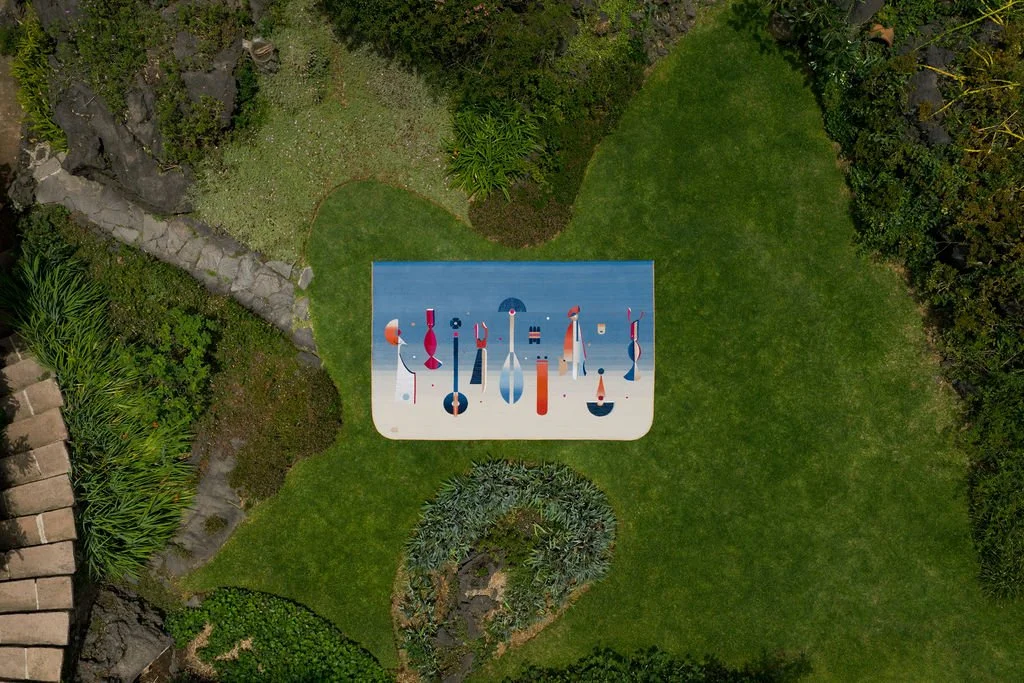
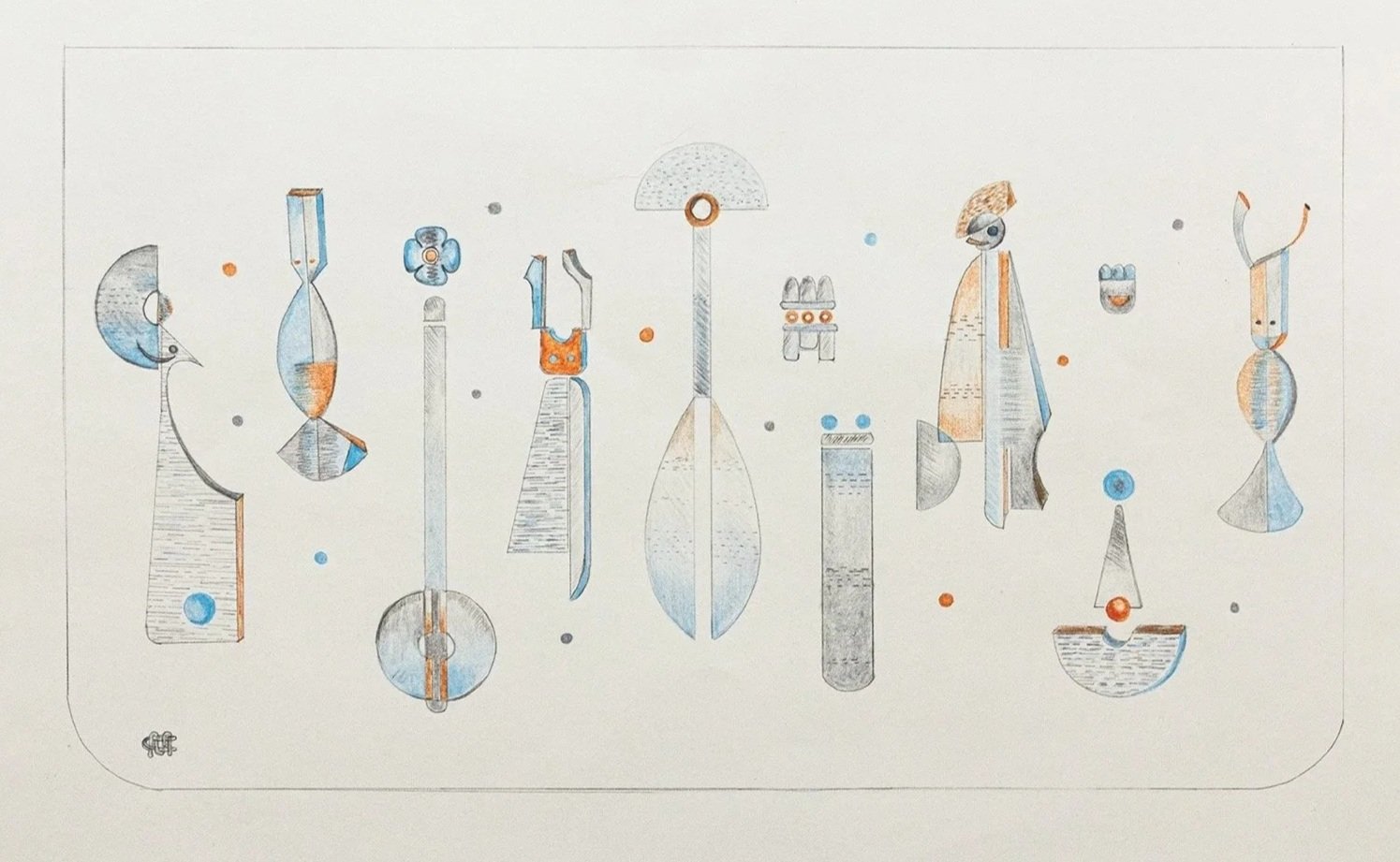
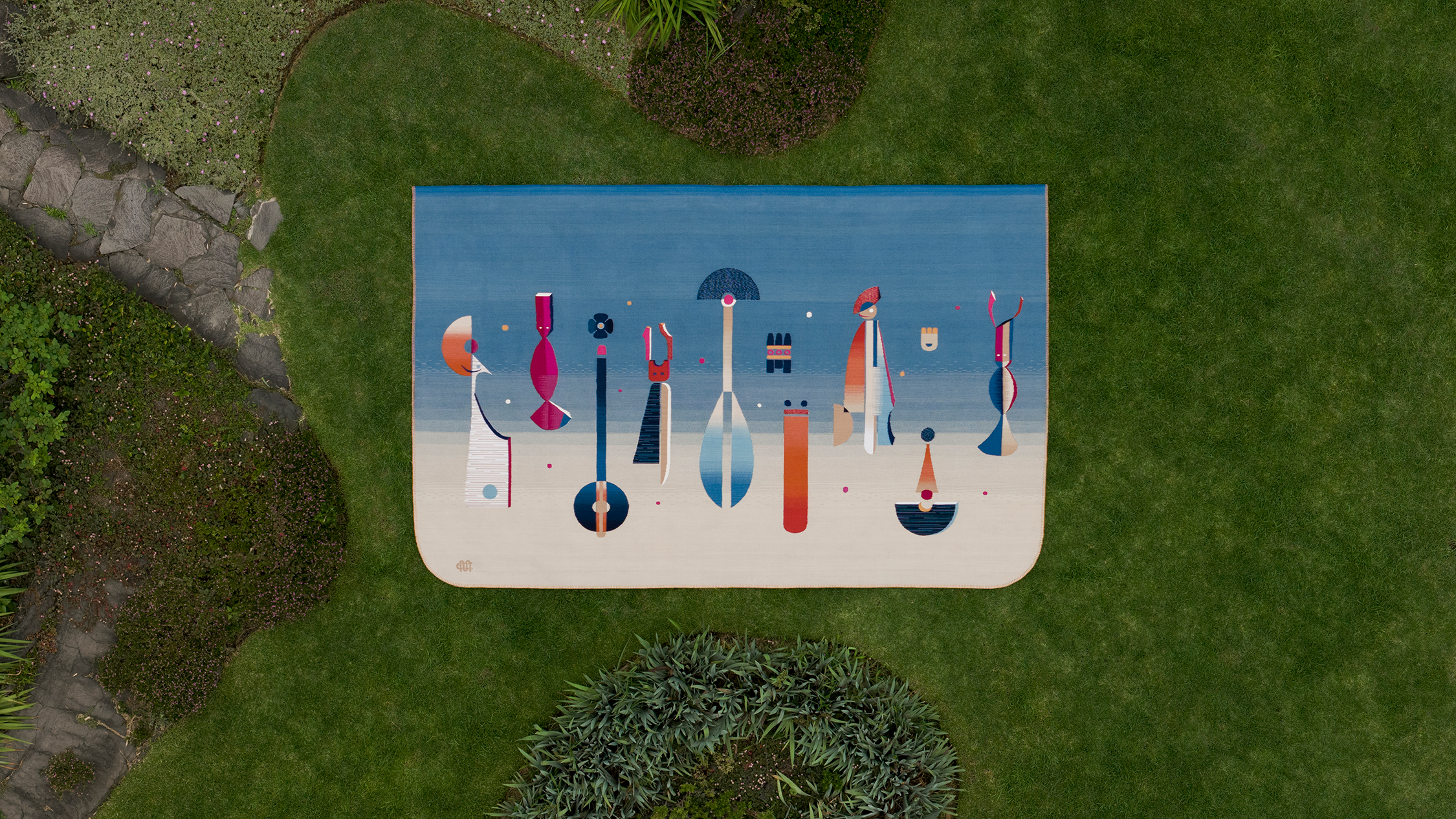
Through a group of eclectic characters, the textile narrates different gestures drawn from the cosmovisions of Mexico’s mother cultures and their encounter with Western culture. This gesture seeks to remind us that both Mexico and the United States of America are cultures constructed through multiculturality, in which migration and territory have continuously redefined and enriched both nations.
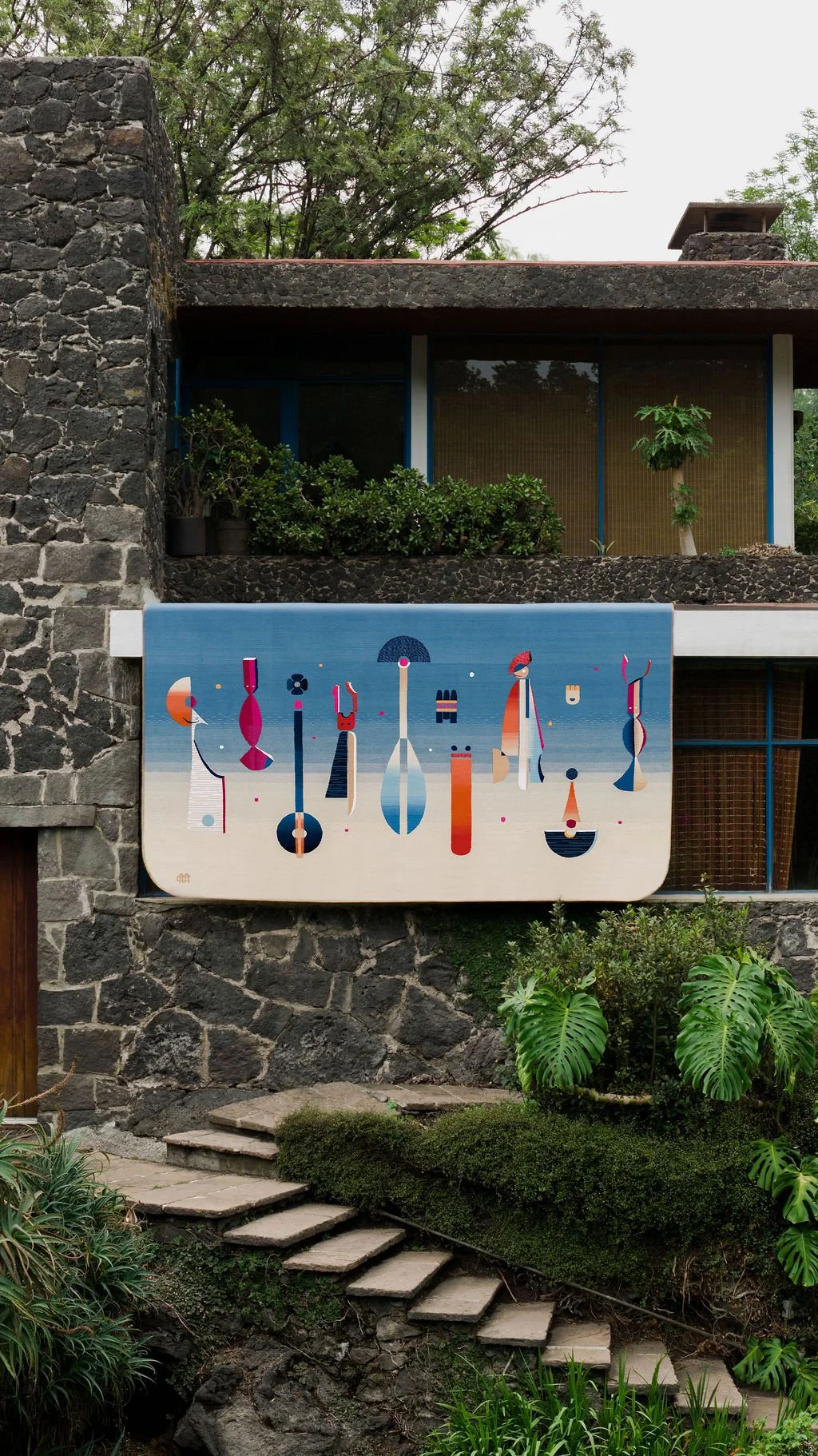
The characters and objects float along the threshold between sky and earth, inhabiting an intermediate space where the terrestrial plane meets the sacred. They are not organized hierarchically, but rather appear as a symbolic community in which each figure represents a form of knowledge and a particular relationship to territory, the body, and existence.
The figures inhabit a space without hierarchy, proposing the possibility of remaining distinct while sharing a common territory.
These ideas extend into the material and technical construction of the work. The weaving process was developed through extensive experimentation before, during, and after production. One of its central technical challenges was adapting a pedal loom in Teotitlán del Valle, Oaxaca, to a number 16 reed rather than the number 13 reed traditionally used for rug weaving. This change produced a significantly finer and denser textile, allowing approximately 3,000 weft passes per square meter and enabling finer yarns, complex interlacings, crossings, and layered textures.
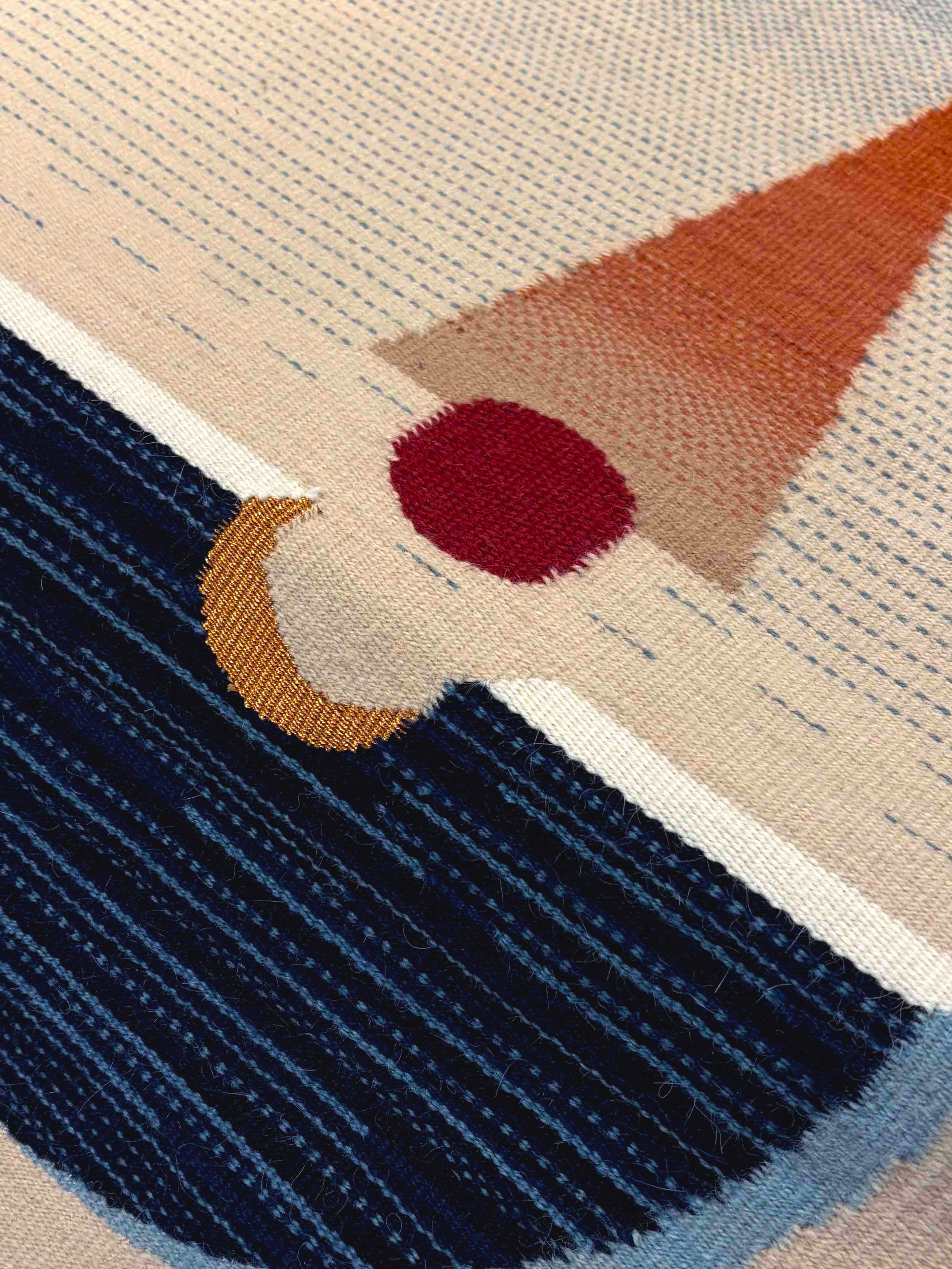
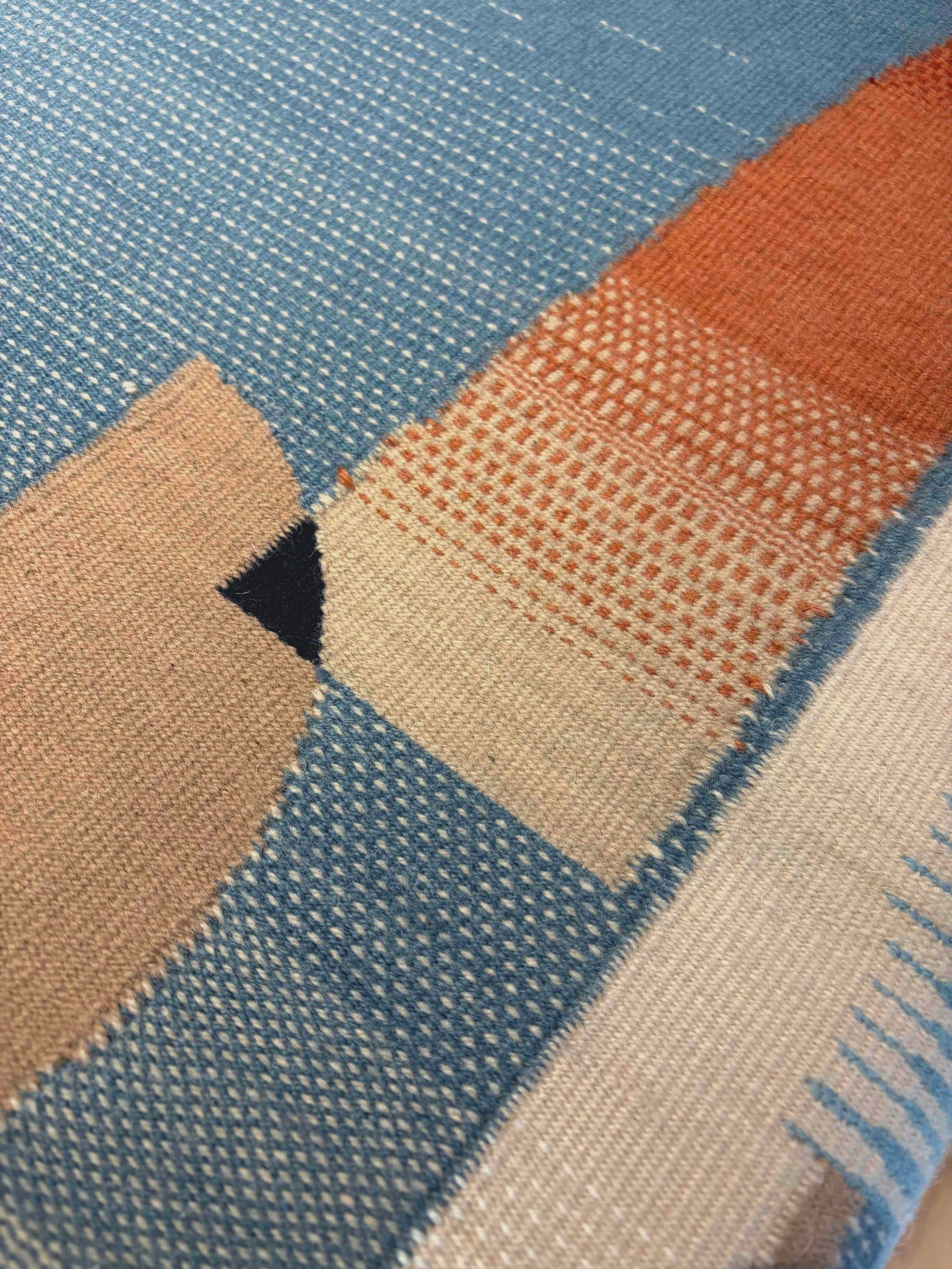
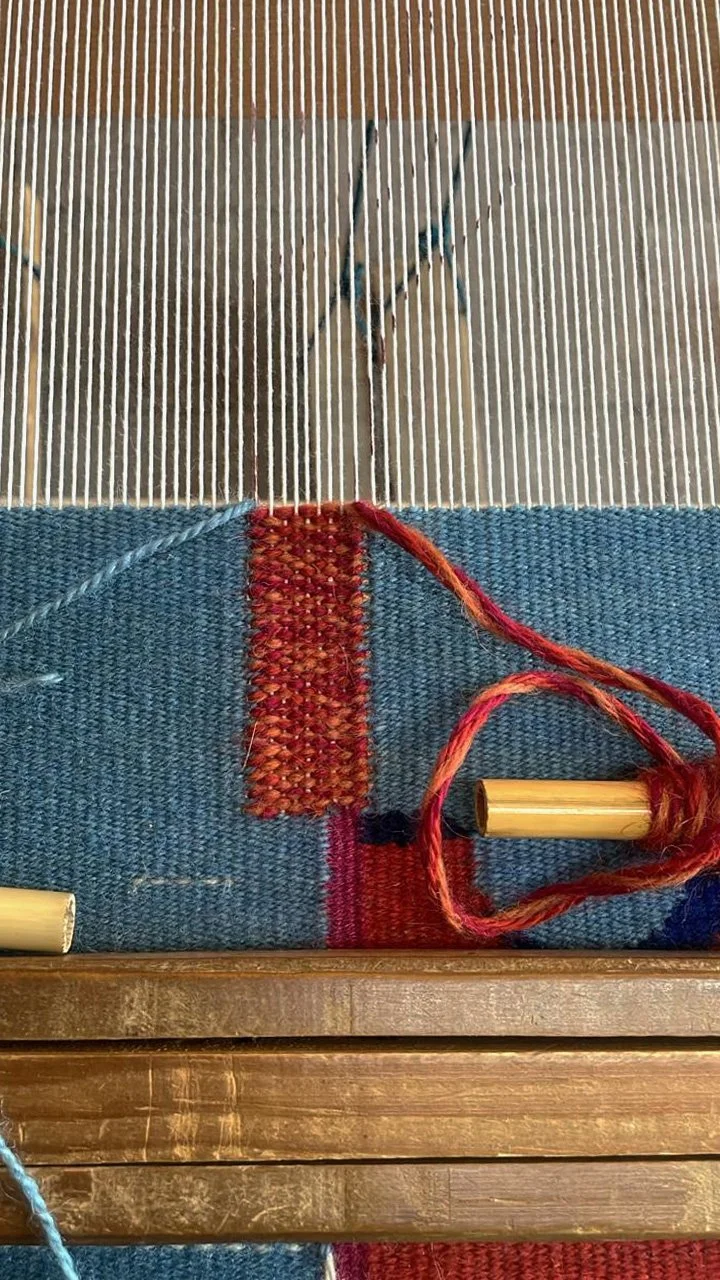
The resulting structure brings together traditional weaving practices from Teotitlán del Valle with tapestry techniques more commonly associated with vertical looms. Silk, mercerized cotton, New Zealand and Lincoln wool, and metallic copper thread coexist within the textile, while natural fibers dyed with cochineal, indigo, pericón, and walnut introduce another layer of material exchange. Gradients, jaspe effects, and luminous colors further articulate non-Western ideals of beauty.
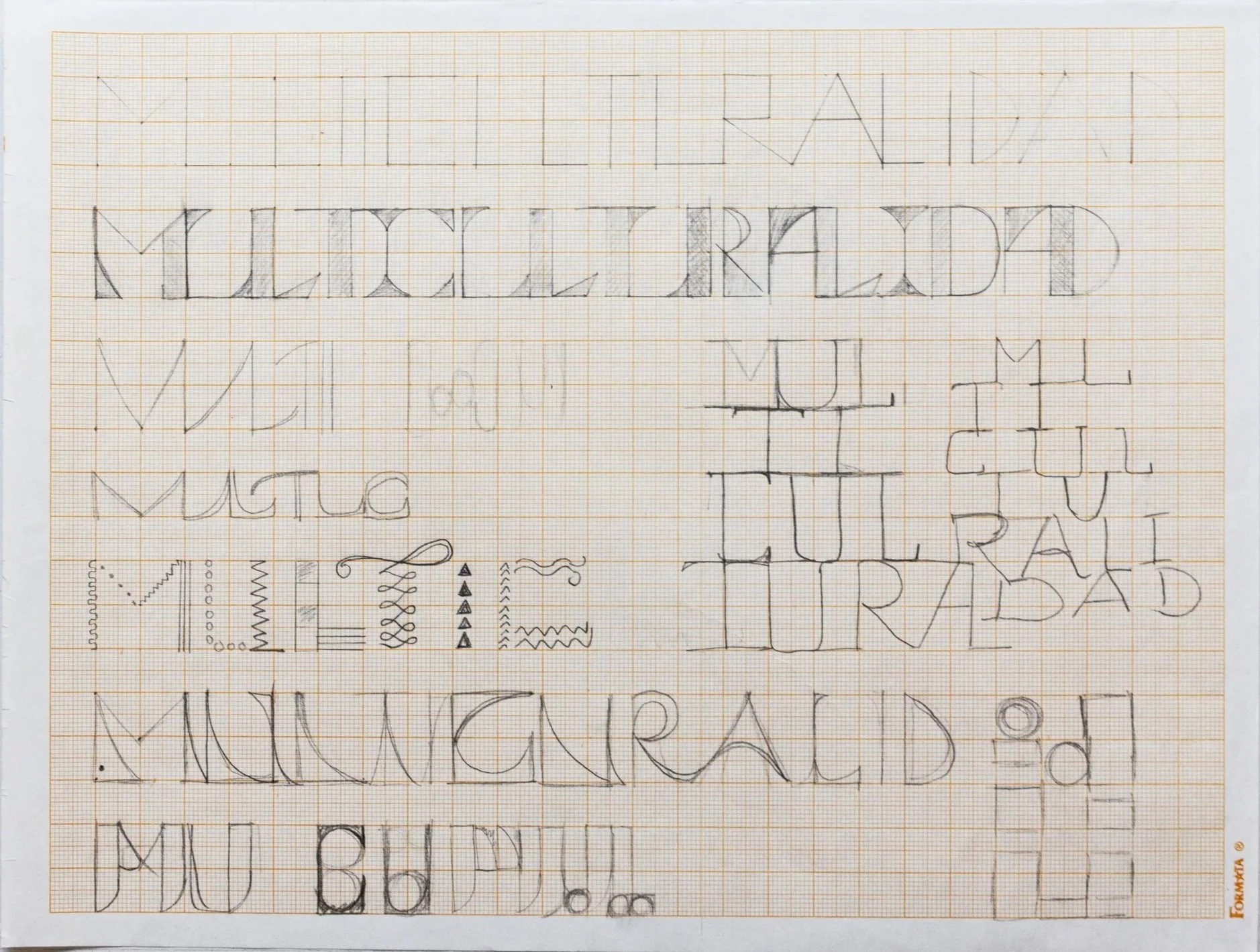
In this way, Multiculturalism does not represent diversity through imagery alone. Its concept is embedded in the construction of the textile itself—through the coexistence of techniques, fibers, colors, materials, and forms of knowledge.
The tapestry, Multiculturalism, will soon be on view at the Benjamin Franklin Library at the United States Embassy in Mexico City, where it forms part of the Embassy’s permanent collection.