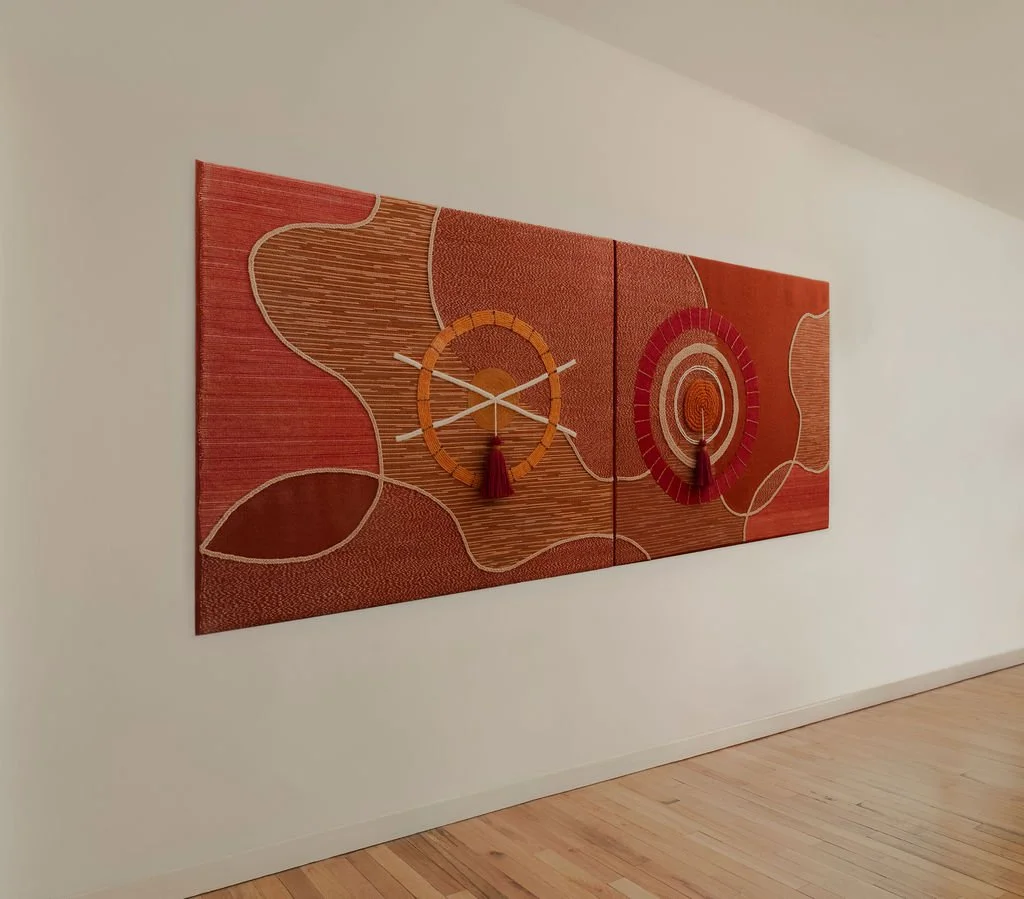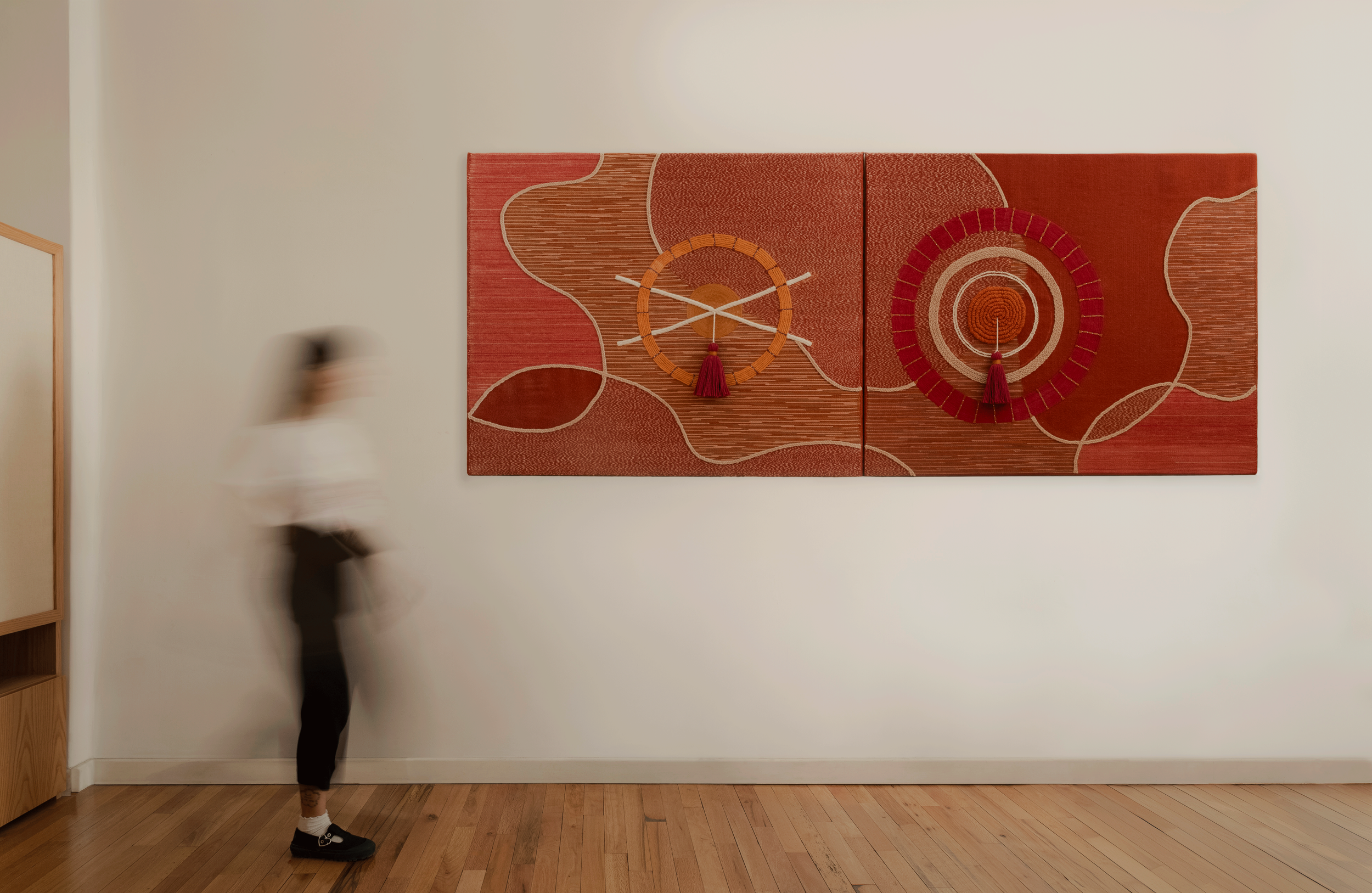
Ritual Union Client: Uribe Krayer Project: Four Seasons State Year: 2025
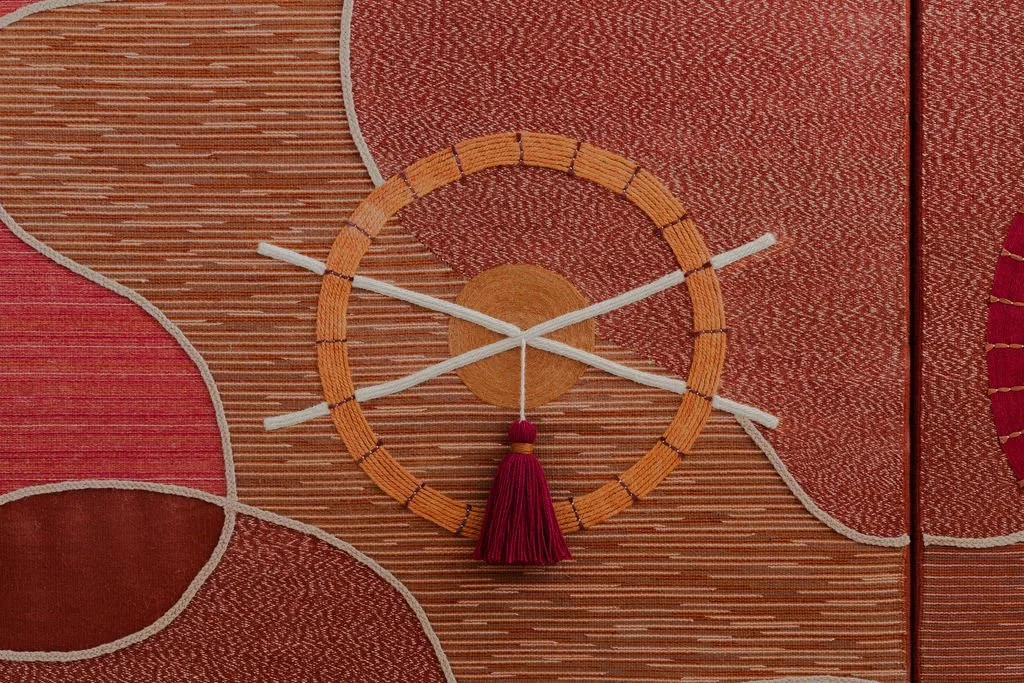
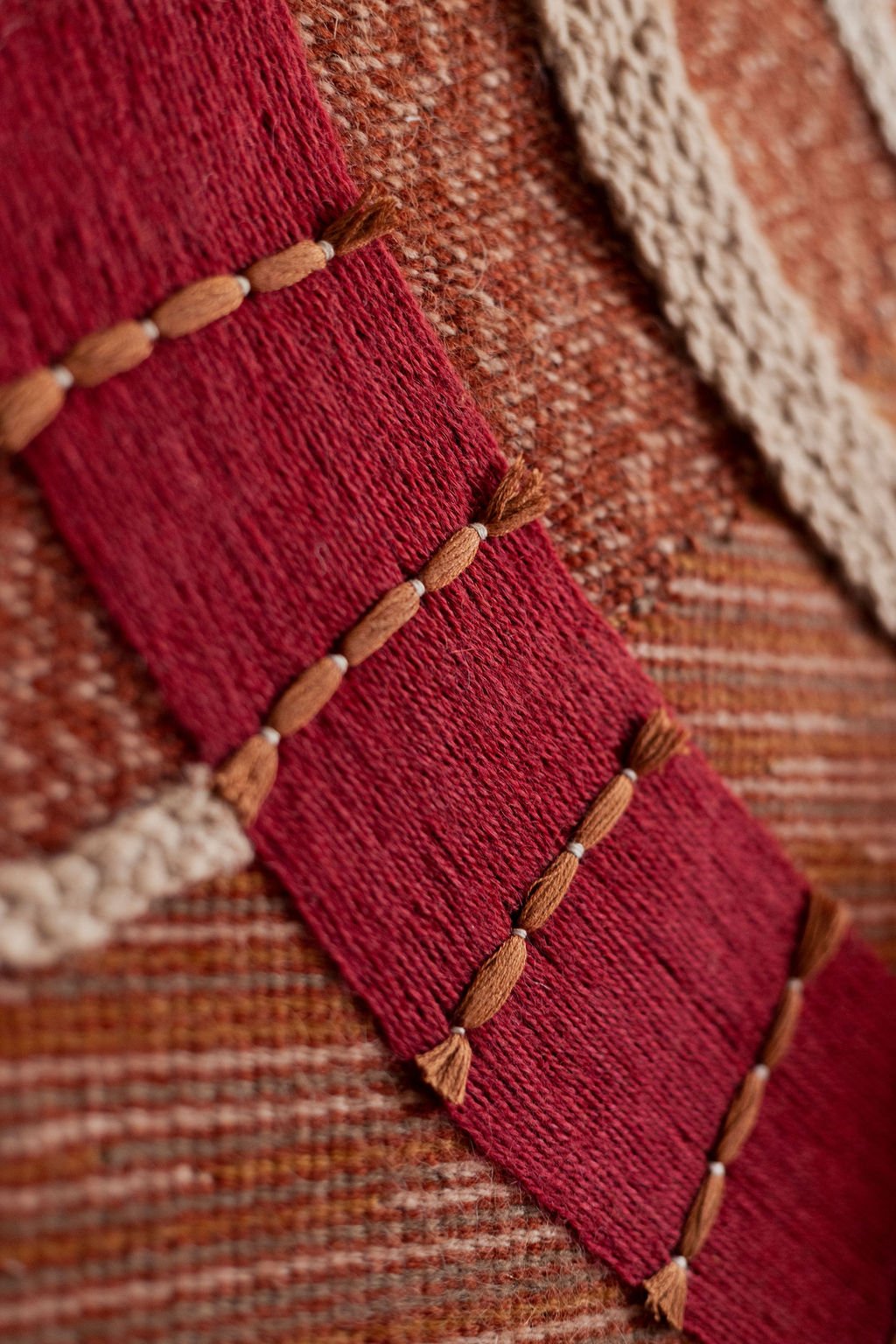
Mix Technique: Tufting, weaving, and embroidery.
Materials: New Zealand wool, Lincoln wool, cotton.
Pigments: Cochineal and pericon.
Traditional agricultural systems form part of humanity’s biocultural heritage. Their continuity represents sustainable strategies that not only ensure cultivation and food diversity but also safeguard cultural knowledge essential to Indigenous peoples and rural communities. These practices have strengthened resilience and food sovereignty in both rural and urban contexts, offering meaningful alternatives to the global challenges brought about by industrialised food production.
Ritual Union is a small tribute to the land and to this ancestral knowledge. The textures of the tapestry evoke the majesty and technical wisdom of Inca agricultural terraces—deeply functional structures whose forms naturally followed the organic lines of the landscape. Their durability speaks for itself: several terraces date back to the Wari period, more than a thousand years ago.
These terraces enabled communities to utilise fertile soil on steep Andean slopes and optimise water distribution, resulting in highly efficient agricultural systems. They also played a crucial role in controlling erosion, reducing soil loss by up to 90 per cent. By decreasing the slope, they minimised runoff and enhanced infiltration, increasing moisture, organic matter, and soil fertility.
For this reason, they played a central role in the Inca food supply, enabling the cultivation of maize, potatoes, beans, mint, and quinoa. Their legacy demonstrates how a respectful relationship with the environment can generate productive, beautiful, and sustainable solutions that continue to inspire new forms of creation today.